











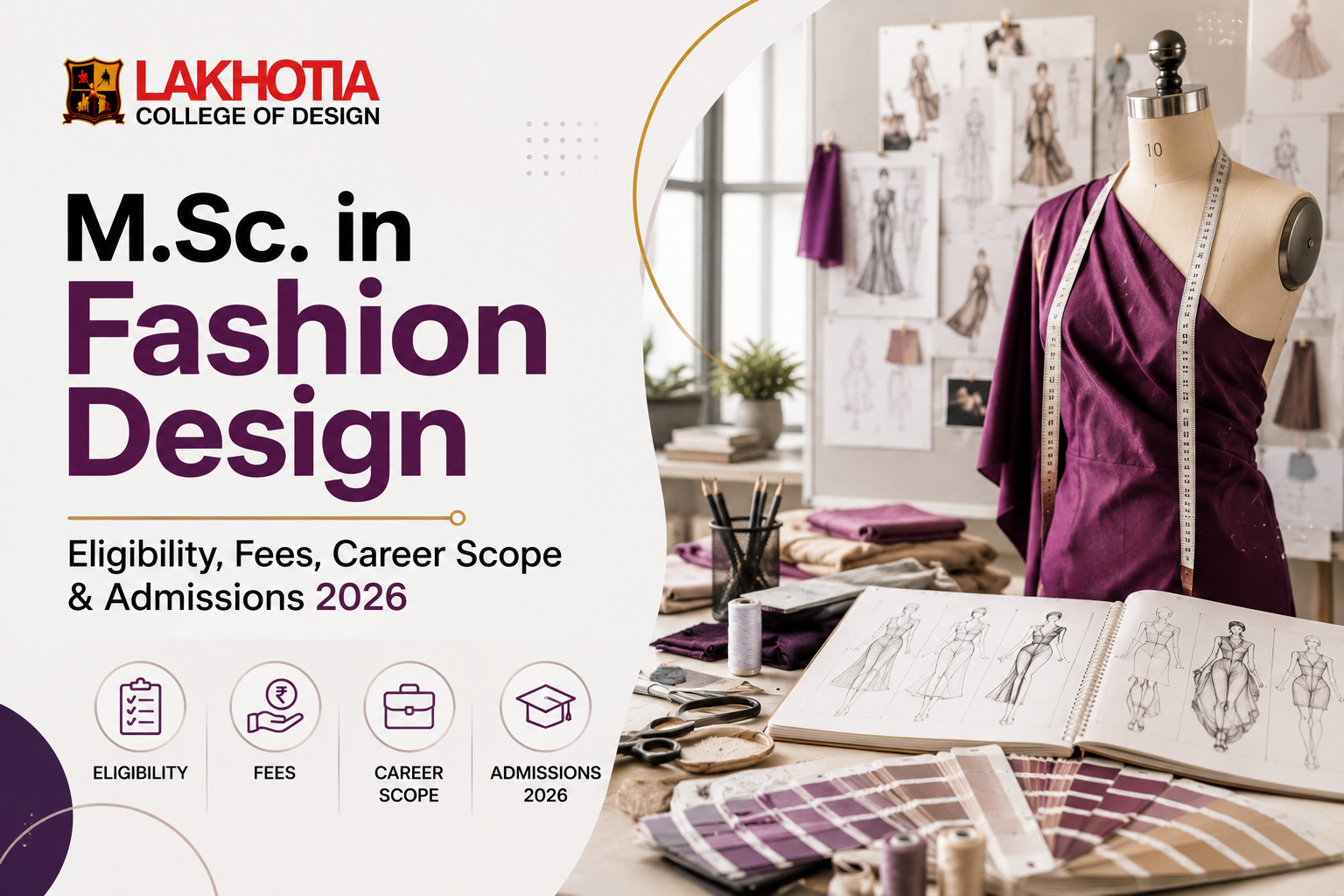
Fashion design as a profession has changed shape considerably over the past decade. What was once a career built primarily on individual creative talent now demands strategic thinking, sustainability awareness, digital fluency, and business acumen — skills a bachelors degree alone often does not have room to develop in full depth. This is precisely the gap an M.Sc. in Fashion Design is built to close.
For graduates who have completed a bachelors degree in fashion design, textiles, or a related discipline, a postgraduate qualification is no longer simply a credential to add to a resume. It has become a deliberate step toward specialisation — in areas such as sustainable design, fashion technology, luxury brand management, or design research — that positions graduates for leadership roles the undergraduate curriculum does not typically prepare them for.
This guide is written for graduates evaluating whether an M.Sc. in Fashion Design is the right next step in 2026. It covers who is eligible, what the programme typically costs and covers, where it leads professionally, and exactly how the 2026 admission process works — so you can make this decision with complete information rather than partial marketing claims.
Table of Contents
Why Choose an M.Sc. in Fashion Design?
M.Sc. in Fashion Design Eligibility Criteria
M.Sc. Fashion Design Course Fees, Duration & Curriculum
Career Opportunities After an M.Sc. in Fashion Design
How to Apply for M.Sc. Fashion Design Admission 2026
FAQs About M.Sc. in Fashion Design
Why Choose an M.Sc. in Fashion Design?
Before examining eligibility and fees, it is worth understanding what actually distinguishes a masters-level fashion design qualification from the bachelors degree most applicants already hold. The distinction matters because it shapes whether this investment of time and money is the right one for a given career goal.
It Builds Specialisation a Bachelors Degree Cannot
An undergraduate fashion design programme is, by necessity, broad — it has to cover garment construction, textiles, pattern making, illustration, and general design theory within a fixed number of years. An M.Sc. programme assumes that foundation is already in place and uses its time instead to go deep into a specific direction: sustainable and ethical fashion, fashion technology and digital design tools, luxury brand strategy, or design research and innovation. Graduates leave with genuine depth in one area rather than continued breadth across all of them.
The Industry Increasingly Rewards Postgraduate Thinking
Fashion houses, retail conglomerates, and design studios are under growing pressure to solve problems that go beyond aesthetics — supply chain sustainability, data-informed design decisions, digital-first product development. These are exactly the kinds of problems a masters-level curriculum is structured to address through research methodology, strategic modules, and applied studio projects that a bachelors programme does not have room for.
It Positions Graduates for Leadership, Not Just Entry-Level Roles
Graduates entering the workforce with only a bachelors degree typically begin in execution-focused roles — assistant designer, junior merchandiser, production coordinator. An M.Sc. qualification, particularly when paired with the two to three years of experience many applicants already have before returning to study, is designed to open design leadership, strategic, and research-oriented roles more directly.
It Opens International Academic and Career Pathways
A recognised postgraduate qualification in fashion design carries more international currency than a bachelors degree alone, particularly for graduates considering further study abroad, international work opportunities, or collaboration with global fashion houses. Institutions with formal international academic partnerships can meaningfully shorten this pathway for ambitious graduates.
M.Sc. in Fashion Design Eligibility Criteria
Eligibility requirements for an M.Sc. in Fashion Design are more specific than undergraduate admission, since the programme assumes a foundation already exists. Here is what most recognised institutions require.
It is worth noting that graduates from allied disciplines — textile design, apparel merchandising, or even fine arts with a strong fashion-related portfolio — are frequently eligible, provided their undergraduate foundation and portfolio demonstrate sufficient design competency. Applicants uncertain about their eligibility based on their specific undergraduate degree should confirm directly with the admissions team rather than assuming ineligibility.
M.Sc. Fashion Design Course Fees, Duration & Curriculum
Understanding the actual structure and cost of an M.Sc. in Fashion Design helps applicants evaluate the investment against realistic expectations, rather than comparing institutions on marketing language alone.
Duration
An M.Sc. in Fashion Design is typically a two-year postgraduate programme, structured across four semesters. The first year generally builds advanced design theory, research methodology, and specialisation foundations, while the second year shifts toward applied studio work, a specialisation project, and often an industry-linked thesis or capstone collection.
Fee Range
Fees for M.Sc. Fashion Design programmes in India vary considerably by institution, city, and facilities offered, typically ranging from approximately Rs 1.5 lakhs to Rs 4 lakhs per year. Institutions with international academic partnerships, specialised studio infrastructure, or industry collaboration programmes often sit toward the higher end of this range. As with any postgraduate investment, fee structure should be evaluated against placement outcomes and specialisation depth, not in isolation.
Curriculum Structure
Specific specialisation tracks vary by institution. Applicants with a clear sense of which direction interests them — sustainability, technology, business strategy, or research — should confirm which specialisation tracks are actually offered before applying, since not every institution offers the same postgraduate specialisations.
Career Opportunities After an M.Sc. in Fashion Design
The career pathways available after an M.Sc. in Fashion Design are meaningfully different from those available straight after a bachelors degree — this is precisely the value the postgraduate qualification is meant to unlock. The following roles represent the primary directions graduates pursue.
Senior/Lead Fashion Designer
With postgraduate specialisation and a stronger portfolio, graduates are positioned for senior design roles more directly than bachelors-only graduates, who typically spend several years in assistant positions before reaching this level. Starting compensation for senior design roles is meaningfully higher, particularly at design houses that value postgraduate research and strategic thinking.
Sustainable Fashion Consultant or Design Lead
As sustainability becomes a commercial requirement rather than a marketing angle for fashion brands, graduates with genuine postgraduate training in sustainable design methodology are increasingly sought after for consulting and in-house sustainability design leadership roles.
Fashion Technology and Digital Design Specialist
Graduates who specialise in fashion technology during their M.Sc. are well positioned for roles bridging design and digital tools — 3D garment visualisation, digital fashion for gaming and virtual environments, and technology-driven product development pipelines that traditional design teams increasingly rely on.
Design Researcher or Trend Strategist
Postgraduate research training opens roles that a bachelors degree alone rarely leads to directly — trend forecasting, design research for major fashion houses, and strategic design consulting, all of which rely on the research methodology skills built specifically at the masters level.
Academic and Teaching Roles
Graduates interested in teaching at the undergraduate design level typically require a postgraduate qualification as a baseline credential. An M.Sc. in Fashion Design opens teaching and academic coordination roles at design institutions for graduates drawn to shaping the next generation of designers rather than working exclusively in industry.
Entrepreneurship and Independent Label Development
For graduates intending to launch their own fashion label, the strategic, research, and business-oriented components of a masters programme provide a stronger foundation than undergraduate study alone — particularly in brand positioning, sustainable sourcing decisions, and design differentiation in a crowded market.
How to Apply for M.Sc. Fashion Design Admission 2026
The admission process for M.Sc. Fashion Design programmes in 2026 follows a fairly consistent sequence across recognised institutions. Here is what applicants should expect.
Step 1: Confirm Eligibility and Shortlist Institutions
Begin by confirming your undergraduate degree and portfolio meet the eligibility bar discussed earlier, then shortlist institutions based on the specific specialisation tracks they offer, faculty research background, industry connections, and placement outcomes for postgraduate students specifically — not just undergraduate placement data, which is often reported separately or not comparable.
Step 2: Prepare Your Portfolio
A strong postgraduate portfolio should demonstrate not just technical design skill but evidence of independent thinking — original concept development, research-informed design decisions, and a body of work that shows growth beyond foundational undergraduate exercises. Applicants should curate their strongest 15-20 pieces rather than submitting everything produced during their bachelors degree.
Step 3: Submit Application and Documents
Bachelors degree mark sheets and certificate
Updated design portfolio (digital or physical, per institution requirement)
Statement of purpose outlining specialisation interest and career goals
Passport-size photographs and identity proof
Work experience documentation, if applicable
Step 4: Appear for Entrance Assessment and Interview
Most institutions conduct a design aptitude assessment and/or a personal interview as part of postgraduate admission. Unlike undergraduate assessments, which test foundational creative aptitude, postgraduate interviews typically probe the applicants specialisation interest, research thinking, and ability to articulate design decisions critically — preparation should focus on being able to discuss your portfolio work in depth, not just present it.
Step 5: Confirm Offer and Complete Enrolment
Successful applicants typically receive an offer within one to two weeks of the interview stage. Confirming enrolment promptly — including fee payment and document verification — matters more at the postgraduate level than undergraduate, since M.Sc. cohorts are typically smaller and seats fill proportionally faster.
FAQs About M.Sc. in Fashion Design
1. Who is eligible for an M.Sc. in Fashion Design?
Eligibility for an M.Sc. in Fashion Design generally requires a bachelors degree in Fashion Design, Textile Design, Apparel Design, or a closely related discipline, with a minimum aggregate of 45 to 50 percent depending on the institution. Most institutions also require a design portfolio and conduct an entrance assessment or interview. Graduates from allied fields with a strong fashion-relevant portfolio are often eligible as well. Work experience is generally not mandatory, though relevant industry experience can strengthen an application, particularly for competitive specialisation tracks.
2. What is the duration of an M.Sc. Fashion Design programme?
An M.Sc. in Fashion Design is typically a two-year postgraduate programme structured across four semesters. The first year generally focuses on advanced design theory, research methodology, and the beginning of specialisation coursework, while the second year shifts toward applied studio projects, industry collaboration, and a final capstone thesis or collection. Some institutions offer accelerated or part-time formats for working professionals, though the standard full-time duration remains two years.
3. How much does an M.Sc. in Fashion Design cost in India?
Fees for M.Sc. Fashion Design programmes in India typically range from approximately Rs 1.5 lakhs to Rs 4 lakhs per year, depending on the institution, city, specialisation infrastructure, and industry partnerships offered. Institutions with international academic collaborations or advanced studio and technology facilities often sit toward the higher end of this range. Applicants should evaluate fee structures alongside placement outcomes and specialisation depth rather than comparing cost in isolation.
4. What career options are available after an M.Sc. in Fashion Design?
Graduates with an M.Sc. in Fashion Design are positioned for senior design roles, sustainable fashion consulting, fashion technology and digital design specialisation, design research and trend strategy, academic teaching positions, and independent label entrepreneurship. Unlike bachelors-only graduates, who typically begin in assistant or execution-focused roles, M.Sc. graduates are generally positioned for design leadership or specialised strategic roles more directly, particularly when paired with a strong portfolio and clear specialisation focus.
5. Is work experience required before pursuing an M.Sc. in Fashion Design?
Work experience is generally not a mandatory eligibility requirement for M.Sc. Fashion Design admission, and many applicants enrol directly after completing their bachelors degree. That said, applicants who have spent one to three years working in the industry before returning for postgraduate study often bring a clearer sense of their specialisation interest and get more value from the strategic and research components of the curriculum. Both direct-entry and experienced applicants are common in most postgraduate cohorts.
6. What specialisations are available within an M.Sc. Fashion Design programme?
Common specialisation tracks within M.Sc. Fashion Design programmes include sustainable and ethical fashion design, fashion technology and digital design tools, luxury brand management and strategy, and design research and innovation. Available specialisations vary by institution, so applicants with a clear interest in a specific direction should confirm which tracks are actually offered before applying, rather than assuming all postgraduate programmes cover the same specialisation options.
Why Choose Lakhotia College of Design
For graduates evaluating where to pursue an M.Sc. in Fashion Design, Lakhotia College of Design brings over 30 years of design education experience into its postgraduate programme — a track record reflected in a 30,000+ alumni network working across the fashion industry in India and internationally.
The M.Sc. Fashion Design curriculum at Lakhotia is built around the same 75:25 practical learning model that defines the institutions approach across all departments, ensuring postgraduate students spend the majority of their time in applied studio work, industry-linked projects, and specialisation-focused practice rather than theory alone. Students benefit from industry workshops, mentorship from practising designers, and exposure to real client and brand briefs that build a portfolio genuinely reflective of professional-level work.
Lakhotias international academic partnerships offer postgraduate students meaningful pathways beyond the standard curriculum — including opportunities to complete part of their studies in Paris and gain international internship exposure at Fashion Weeks in London, New York, Paris, and Dubai. For students who see this postgraduate qualification as a stepping stone to a global fashion career, these pathways are a genuine differentiator rather than a marketing claim.
The colleges 100% placement assistance and active entrepreneurship support extend to postgraduate students as well, connecting M.Sc. graduates to the same industry network that has supported Lakhotias undergraduate alumni for over three decades.
Conclusion
An M.Sc. in Fashion Design is a deliberate, strategic decision for graduates who have already built a foundation in design and are ready to specialise, lead, and think at a higher strategic level within the fashion industry. It is not the right step for every bachelors graduate — but for those with a clear sense of the specialisation they want to pursue, it is one of the most direct ways to move from execution-focused early-career roles into design leadership, research, or entrepreneurship.
If you are evaluating this decision, take the criteria in this guide seriously: confirm genuine eligibility, understand what each institutions specialisation tracks actually offer, and evaluate fee structures against real placement outcomes rather than marketing language. The right postgraduate programme is the one whose curriculum and industry connections align with the specific direction you want your fashion career to take.
Explore M.Sc. Fashion Design admissions for 2026 at Lakhotia College of Design, Hyderabad. Contact the admissions team at +91-98853 91914 or visit lakhotiaedu.com to schedule a campus visit.



.png)





Leave a reply