










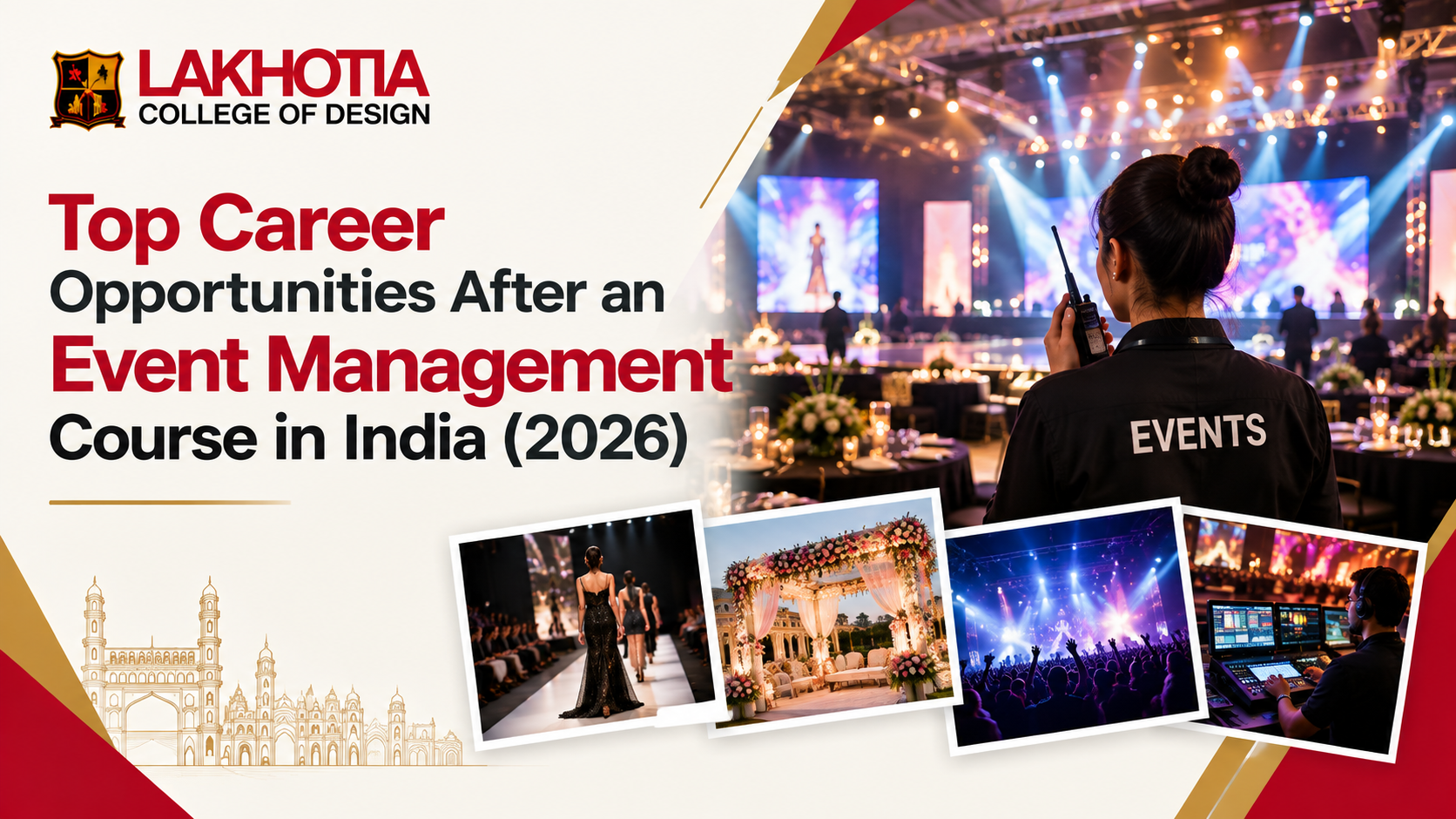
Ask ten people what an event management career looks like and most will describe the same narrow picture — someone coordinating a wedding, clipboard in hand, running between vendors. That picture is real, but its a small fraction of where an event management course actually leads. Indias events industry today spans weddings, corporate conferences, product launches, trade exhibitions, sports tournaments, and large-scale entertainment — each with its own career track, client relationships, and earning potential.
For someone deciding whether to pursue this course, or a graduate trying to figure out which direction to specialise in, the real question isnt "is event management a good career" in the abstract. Its "which part of this industry fits how I actually want to work, and what does that path look like in practice."
This guide breaks down the career landscape by category — weddings and social events, corporate and MICE events, and exhibitions, sports, and entertainment events — along with the skills that separate a thriving event career from a stalled one, realistic salary expectations across roles, and a practical roadmap for building momentum after your course ends.
Table of Contents
What Can You Do After an Event Management Course?
Top Career Opportunities After an Event Management Course
Career Opportunities in Weddings & Social Events
Career Opportunities in Corporate & MICE Events
Career Opportunities in Exhibitions, Sports & Entertainment Events
Skills Needed for a Successful Event Management Career
How to Build a Successful Career After an Event Management Course
Event Management Salary in India (2026)
Why Choose a Career in Event Management?
FAQs About Career Opportunities After an Event Management Course
What Can You Do After an Event Management Course?
An event management course builds a core skill set — budgeting, vendor negotiation, logistics coordination, client communication, and event marketing — that applies across every category of events. What differs is the context you apply it in. A wedding planner and a corporate MICE manager both use the same fundamental training, but the day-to-day work, client relationships, scale, and even the personality traits that thrive in each role look quite different.
The honest starting point is that the course gives you the toolkit, not a fixed destination. Which category you specialise in should be driven by genuine interest and working style — some people thrive on the emotional, detail-obsessed world of weddings, others prefer the structured, corporate rhythm of conference and MICE management, and others are drawn to the scale and technical complexity of large exhibitions or sports events.
Top Career Opportunities After an Event Management Course
Before breaking down each category, heres the full landscape of roles at a glance.
Wedding Planner / Wedding Coordinator
Corporate Event Manager
MICE (Meetings, Incentives, Conferences, Exhibitions) Specialist
Exhibition and Trade Show Manager
Sports Event Manager
Entertainment and Concert Event Coordinator
Event Marketing Executive
Event Production Manager (staging, sound, lighting coordination)
Independent Event Company Founder
Career Opportunities in Weddings & Social Events
Indias wedding industry is one of the largest consumer spending categories in the country, and it remains one of the most accessible entry points into an event management career — as well as one of the most rewarding for planners who build a strong personal brand.
Wedding Planner / Coordinator
Manages the full arc of a wedding — venue selection, vendor coordination, budget management, timeline planning, and on-the-day execution. Entry-level planners typically work under an established planner or agency before building their own client base.
Destination Wedding Specialist
A growing, well-compensated niche managing weddings at out-of-town or international venues, requiring additional logistics expertise around travel, guest accommodation, and remote vendor coordination.
Décor and Styling Coordinator
Focuses specifically on the visual and design layer of social events — working closely with décor vendors, florists, and lighting teams to execute a specific aesthetic vision, often in close collaboration with the lead planner.
Career Opportunities in Corporate & MICE Events
Corporate Indias growing investment in experiential marketing, employee engagement, and large-scale conferences has made this one of the fastest-growing and best-compensated segments of the events industry.
Corporate Event Manager
Manages product launches, brand activations, internal corporate events, and press events — often working directly with marketing or communications teams, requiring comfort with corporate stakeholder management alongside core event skills.
MICE Specialist
Handles Meetings, Incentives, Conferences, and Exhibitions — typically large-scale, multi-day corporate events involving significant logistics complexity, international delegates, and substantial budgets. This is one of the higher-earning specialisations given the scale involved.
Brand Activation Executive
Works at the intersection of marketing and events, designing and executing experiential brand moments — pop-ups, product sampling events, and immersive brand experiences — for consumer and corporate brands.
Career Opportunities in Exhibitions, Sports & Entertainment Events
This category covers some of the largest-scale, highest-complexity events in the industry, offering a genuinely different pace and skill emphasis than weddings or standard corporate events.
Exhibition and Trade Show Manager
Manages large-scale trade shows and expos, coordinating hundreds of vendor booths, exhibitor logistics, and visitor flow — a role demanding strong operational and spatial planning skills at scale.
Sports Event Manager
Coordinates logistics for sporting tournaments and events — venue operations, athlete and team logistics, spectator experience, and often broadcast coordination — a specialised and growing field as Indias sports industry expands.
Entertainment and Concert Event Coordinator
Works on concerts, festivals, and large public entertainment events, coordinating with production teams, artist management, security, and venue operations — technically demanding given the scale and safety considerations involved.
Event Production Manager
A specialised technical role overseeing staging, sound, lighting, and on-ground production execution — often working across weddings, corporate events, and entertainment events depending on the production house or agency.
Skills Needed for a Successful Event Management Career
Budgeting and cost control — protecting margins while delivering client expectations
Vendor negotiation and relationship management — a strong vendor network compounds in value over a career
Crisis management and composure under pressure — events rarely go exactly to plan
Client communication and expectation management
Project and timeline management across multiple moving parts simultaneously
Digital fluency — event management software, social media promotion, digital vendor coordination
For design-oriented roles specifically: an eye for spatial layout, atmosphere, and visual storytelling
How to Build a Successful Career After an Event Management Course
Choose a Category and Build Depth Early
Rather than trying to stay generalist across weddings, corporate, and exhibitions simultaneously, early specialisation in one category builds a stronger reputation and vendor network faster than spreading thin across all of them.
Prioritise Live Event Experience Over Classroom Hours
Internships and assisting roles on real events — even unpaid or low-paid ones early on — build the practical judgement and vendor relationships that no amount of classroom instruction can replicate.
Build Your Vendor Network Deliberately
Strong relationships with venues, caterers, décor teams, and production vendors are a career-long asset. Treat every event as an opportunity to build and maintain these relationships, not just execute the brief in front of you.
Document Every Event for Your Portfolio
Photos, client testimonials, and specific outcomes (guest count, budget managed, problems solved) build a portfolio that matters more in client-facing event work than a resume alone.
Consider Where You Want to Land — Employment or Independent Practice
Some event professionals build long careers within agencies or corporate event teams; others use early years to build the experience and network needed to launch an independent company. Being clear about which path youre building toward shapes which opportunities are worth prioritising early on.
Event Management Salary in India (2026)
These figures reflect general national ranges for trained event management professionals and will vary by city, specialisation, employer, and individual client base or portfolio. Wedding planning and MICE roles in particular carry wide variance since much of the upside comes from project-based fees and reputation rather than fixed salary alone.
Why Choose a Career in Event Management?
Beyond the salary numbers, event management offers something relatively rare among structured career paths: genuine category diversity within a single skill set, a realistic and comparatively fast path to independent practice, and tangible, visible outcomes — you can point to an event you built and say exactly what you delivered, which is a different kind of professional satisfaction than many desk-based careers offer.
It also rewards people who build reputation deliberately. Unlike careers where advancement depends primarily on tenure within one organisation, event management careers compound based on the network and portfolio you build — which means ambitious, relationship-driven professionals can move faster than a traditional corporate ladder would allow.
Why Choose Lakhotia College of Design
For students building a career across any of the categories covered in this guide, Lakhotia College of Designs approach to Event Design & Management is built to prepare graduates for the full range of paths outlined here — not just one narrow slice of the industry.
The programmes 75:25 practical learning model means students work on real event concepts and production challenges throughout the course, not just in a final internship. Because the curriculum treats event work as a design discipline first — spatial thinking, atmosphere, experience — graduates carry a genuine creative differentiator into whichever category they choose to specialise in, whether thats weddings, corporate MICE events, or large-scale exhibitions and entertainment production.
Lakhotias industry mentorship, live event exposure, and placement support connect graduates to real opportunities across this landscape, backed by the institutions 30-year design education legacy and its network of alumni working across Indias creative industries.
Conclusion
The career opportunities after an event management course are genuinely broad — spanning intimate wedding planning, high-stakes corporate MICE management, and large-scale exhibition and entertainment production, each with its own rhythm, client relationships, and earning potential. The strongest careers in this field belong to professionals who choose a category deliberately, build real vendor relationships and portfolio evidence early, and stay clear-eyed about whether they re building toward long-term employment or independent practice.
Whichever direction you choose, the foundation is the same: genuine training, real event experience, and a willingness to build reputation one event at a time.
Explore Event Design & Management admissions for 2026 at Lakhotia College of Design, Hyderabad. Contact the admissions team at +91-98853 91914 or visit lakhotiaedu.com to schedule a campus visit.
FAQs About Career Opportunities After an Event Management Course
1. Which event management specialisation pays the most in India?
MICE (Meetings, Incentives, Conferences, Exhibitions) management and established wedding planning tend to offer the strongest earning potential, given the scale of corporate MICE budgets and the reputation-driven, project-fee-based earning model of successful wedding planners. That said, independent event company founders across any category have the highest overall ceiling, though also the highest variability and risk.
2. Can I specialise in more than one category, like weddings and corporate events?
Its possible, but most successful event professionals recommend building deep expertise and a strong vendor network in one category before expanding into a second. Trying to build reputation across multiple categories simultaneously, especially early in a career, tends to dilute the relationship-building that drives referrals and repeat business in this industry.
3. Do I need to start my own company to earn well in event management?
No. Strong salaried careers exist within established event agencies, corporate in-house event teams, and hospitality or MICE-focused companies, particularly in roles like corporate event manager or MICE specialist. Independent practice offers a higher ceiling but also carries more risk and typically takes several years of employed experience to build toward successfully.
4. What is the fastest-growing category in Indian event management right now?
Corporate MICE events and experiential brand activations are among the fastest-growing categories, driven by increased corporate spending on conferences, product launches, and experiential marketing. Sports event management is also expanding alongside Indias growing domestic sports industry.
5. How important is a formal course versus gaining experience through internships?
Both matter, and they work best together. A formal course builds the budgeting, vendor negotiation, and project management foundations systematically, while internships and assisting roles on live events build the practical judgement and vendor relationships that only come from real experience. Graduates who combine structured training with genuine live event exposure during their course tend to enter the job market with a meaningful advantage over those with only one or the other.
6. What soft skills matter most for a long-term event management career?
Composure under pressure and genuine relationship-building ability matter more over a long career than any single technical skill, since events rarely go exactly to plan and the industry runs heavily on vendor and client relationships built over time. Strong communicators who stay calm during on-the-day problems and follow through reliably tend to build the reputations that sustain decades-long careers in this field.



.png)




.png)

Leave a reply